


Argentine Lunfardo: The Language of Buenos Aires, Tango and Argentine Identity

Updated: Sep 15
What is Lunfardo? Where did it come from? Why is it so closely connected with Argentine tango? And what do words such as laburo, pibe, mina, guita, morfar, chamuyo and gotán really mean?
If you study Argentine tango, listen to tango music, travel to Buenos Aires, or simply want to understand Argentine Spanish better, sooner or later you will encounter a fascinating part of Argentine culture: Lunfardo.
Lunfardo is one of the most distinctive linguistic expressions of Argentina, particularly of Buenos Aires and the Río de la Plata region. It is closely associated with tango, but it is much more than "the language of tango."
It is a living vocabulary of words and expressions that developed in the urban environment of Buenos Aires and Montevideo, absorbed influences from immigrants and local speech, became deeply connected with popular culture and tango, and eventually entered everyday Argentine Spanish.
Some Lunfardo words are now so common that many Argentinians use them without thinking of them as special slang at all.
Understanding Lunfardo is therefore not simply learning a list of unusual words.
It is learning another layer of Argentine culture.
What Is Lunfardo?
The first important point is that Lunfardo is not a separate language like English, Japanese or Italian.
It is better understood as a lexical repertoire: a collection of words, expressions and linguistic forms that developed within the popular speech of the Río de la Plata.
Lunfardo exists inside Spanish.
An Argentine can speak perfectly standard Spanish and suddenly use Lunfardo vocabulary:
Tengo que laburar mañana.
Literally, this means:
"I have to work tomorrow."
But an Argentine would normally understand:
trabajar = standard Spanish
laburar = Argentine/Lunfardo vocabulary
The sentence is still Spanish.
The special element is the vocabulary.
This distinction is important because Lunfardo has often been incorrectly described as an independent "secret language" or simply as "criminal slang."
Its origins are indeed connected with marginalized urban environments and the criminal underworld of nineteenth-century Buenos Aires, but Lunfardo quickly escaped those boundaries.
It entered popular speech, theater, journalism, literature, music and, above all, tango.
Eventually many Lunfardo words became ordinary Argentine expressions.
Where Did Lunfardo Come From?
To understand Lunfardo, we need to understand Buenos Aires during the late nineteenth and early twentieth centuries.
Buenos Aires was undergoing enormous social and demographic transformation.
Millions of immigrants arrived in Argentina during the great immigration waves, particularly from Europe. Italians and Spaniards represented enormous communities, but Buenos Aires also received people from many other parts of Europe and the world.
They brought their languages, accents, expressions and ways of constructing words.
Buenos Aires became an extraordinary linguistic laboratory.
Spanish was being spoken alongside Italian dialects, especially varieties from northern and southern Italy, as well as Spanish varieties from different regions of Spain and many other languages.
People living together in dense urban neighborhoods naturally exchanged vocabulary.
A word from one language could acquire a new pronunciation.
A foreign expression could change meaning.
A Spanish word could receive a new suffix.
Two words could be combined.
Syllables could be rearranged.
And eventually, completely new expressions could emerge.
This mixture contributed to the development of the distinctive speech associated with Buenos Aires.
The Conventillo and the Birth of Urban Buenos Aires Speech
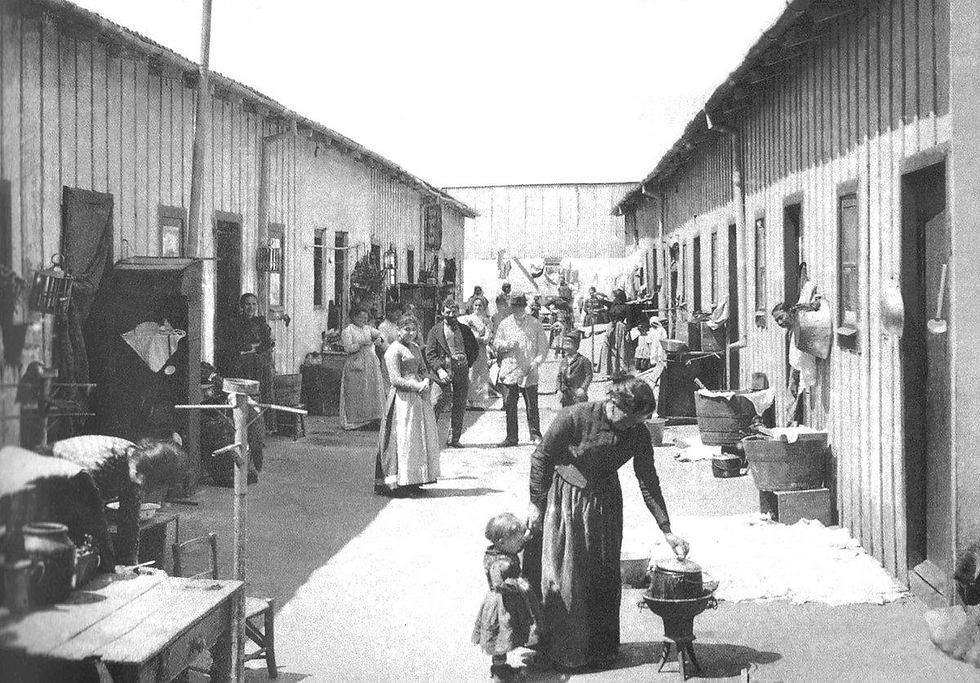
One of the most important environments for this linguistic mixing was the conventillo.
A conventillo was a type of communal housing, often occupied by working-class families and immigrants.
People from different countries and linguistic backgrounds lived extremely close to one another.
Imagine a building where an Italian immigrant, a Spanish immigrant, an Argentine-born child, a person from the interior of Argentina and someone from another European community are all interacting every day.
Language naturally changes under these conditions.
Children grew up hearing different accents.
Neighbors borrowed words from one another.
Young people created their own expressions.
Workers developed occupational vocabulary.
Street culture created new forms of communication.
And Buenos Aires developed an increasingly distinctive urban identity.
Lunfardo emerged from this complex social environment.
Was Lunfardo Originally a Criminal Language?
This is where the history becomes particularly interesting.
The word lunfardo itself became associated with thieves and the criminal underworld.
In early usage, lunfardo could refer to a thief.
Consequently, the vocabulary associated with this world was sometimes described as the language of criminals.
There was an obvious practical reason for criminals to use expressions that outsiders did not immediately understand.
But this is only the beginning of the story.
Words do not stay inside social groups forever.
Expressions used by one community can be adopted by another.
A word that begins as criminal slang can become popular slang.
Popular slang can enter songs.
Songs can become nationally famous.
And eventually the original social meaning can disappear completely.
That is essentially what happened with a considerable part of Lunfardo.
Today, an Argentine saying:
¿Cuánto sale?
or
No tengo un mango.
is not necessarily trying to communicate secretly.
It is simply speaking Argentine Spanish.
Lunfardo and Italian Influence
One of the most fascinating aspects of Lunfardo is its relationship with Italian immigration.
Argentina received an enormous Italian immigrant population, and Italian influence became deeply embedded in Argentine culture.
This influence can be heard in:
pronunciation
intonation
gestures
expressions
vocabulary
humor
social interaction
and, of course, Lunfardo.
Words and expressions entered Buenos Aires speech from different Italian dialects and underwent changes.
But Lunfardo should not be described simply as "Italian mixed with Spanish."
That would be an oversimplification.
Its vocabulary developed from many sources, including:
Spanish
Italian and Italian dialects
indigenous languages
African linguistic influences
French
Portuguese
English
Romani vocabulary
rural Argentine vocabulary
gauchesque expressions
prison and criminal vocabulary
popular urban speech
creative word formation
The fascinating part is not simply where each word originated.
It is what Buenos Aires did with those words.
Lunfardo and Tango
This is where Lunfardo becomes inseparable from the history of Argentine tango.
Tango emerged from the complex cultural environment of Buenos Aires and the Río de la Plata.
Its early development was connected with working-class neighborhoods, ports, dance halls, cafés, nightlife and urban popular culture.
The people who created and danced tango were not speaking the formal Spanish of academic literature.
They were speaking the language of the street.
And tango lyrics eventually began to reflect that world.
This was revolutionary.
Tango stopped being only music for dancing.
It became a way of telling stories.
Stories about:
love
betrayal
poverty
nightlife
friendship
loneliness
immigration
ambition
jealousy
lost youth
Buenos Aires
the barrio
prostitutes
compadritos
working people
drinking
gambling
heartbreak
nostalgia
And to tell those stories authentically, tango needed the language of the people who lived them.
That language included Lunfardo.
From Tango Dancing to Tango Poetry
One of the great transformations in tango history occurred when tango lyrics became increasingly sophisticated.
Early tango was often associated primarily with instrumental music and dance.
But during the early twentieth century, tango developed a powerful poetic dimension.
Writers such as Pascual Contursi, Celedonio Flores and later Enrique Santos Discépolo helped transform tango lyrics into one of the most recognizable forms of Argentine popular poetry.
Lunfardo gave these lyrics something that formal Spanish could not always provide:
voice.
It made the characters sound like people from Buenos Aires.
Consider the difference between:
trabajo
and
laburo
or:
dinero
and
guita
or:
comer
and
morfar.
The second word in each pair carries social and cultural information.
It tells you something about the speaker.
That is one of the reasons Lunfardo became so powerful in tango.
Carlos Gardel and the Internationalization of Lunfardo
The worldwide popularity of Carlos Gardel helped carry Argentine tango vocabulary far beyond Buenos Aires.
Gardel became the international face of tango during the 1920s and 1930s.
His recordings and films introduced audiences throughout Latin America, Europe and elsewhere to a very particular Argentine sound.
And within those songs were words that were unfamiliar even to many Spanish speakers outside the Río de la Plata.
A listener could understand the emotion of a tango without understanding every word.
This is still true today.
You can hear the sadness in a tango.
You can understand the story emotionally.
But a single Lunfardo word can completely change the meaning.

Why Tango Lyrics Can Be Difficult to Translate
Translating tango is not simply a matter of replacing Spanish words with English words.
Take:
mina
A dictionary might translate this as:
woman / girl
But that does not completely communicate its cultural register.
Or:
gil
Possible translations include:
fool / sucker / naive person
Again, context matters.
Or:
chamuyo
Depending on context:
sweet talk・persuasive talk・bullshit・seductive talk・smooth talking
A single English word cannot always capture the Argentine meaning.
Japanese presents an even greater challenge.
For example, chamuyo might require:
口説き文句・うまい話・口先だけの話 (Pick-up lines, sweet talk, empty promises)
depending on the context.
This is why understanding Lunfardo can make listening to tango much more interesting.
Tango Playlist with some of the songs where lunfardo is recorded :
What Is Vesre?
One of the most famous characteristics associated with Lunfardo is vesre.
The name comes from revés, meaning "reverse."
The basic idea is to rearrange the sounds or syllables of a word.
The classic example is:
tango → gotán
This is one of the most famous examples in Argentine culture.
Other examples include:
cabeza → zabeca
doctor → tordo
quilombo → bolonqui
The purpose isn't simply to make a word difficult to understand.
Vesre became a playful and creative linguistic mechanism.
It also became a recognizable marker of Buenos Aires popular speech.
For tango lovers, gotán is particularly important.
When you see or hear gotán, you are essentially seeing the word tango reflected in a linguistic mirror.
Lunfardo Is Much More Than Old Tango Vocabulary
It would be a mistake to think that Lunfardo disappeared with the golden age of tango.
Many words remain completely alive in Argentina.
Consider:
laburo — work
laburar — to work
guita — money
pibe — boy / young person
mina — woman
morfar — to eat
fiaca — laziness
quilombo — mess / chaos
chamuyo — persuasive or seductive talk
afanar — to steal
garpar — to pay
manyar — to understand
rajar — to leave / get out
piantarse — to leave / escape
An Argentine today can use these naturally in everyday conversation.
Lunfardo therefore isn't simply a historical curiosity.
It is a living part of Argentine Spanish.
Lunfardo and Argentine Identity
Language is more than communication.
It tells us where people come from.
It can tell us what social environment they grew up in.
It can communicate humor, intimacy, irony, affection or aggression.
This is particularly true in Argentina.
Argentine Spanish has a very distinctive personality.
The famous voseo is one example:
vos tenés
instead of:
tú tienes
The pronunciation, intonation, gestures and vocabulary all contribute to the recognizable Argentine identity.
Lunfardo adds another layer.
It is part of the cultural vocabulary of Buenos Aires.
And tango became one of its greatest artistic vehicles.
The Ultimate Argentine Lunfardo Dictionary
The following dictionary is designed especially for people interested in Argentine Spanish, Buenos Aires, Argentine tango and tango lyrics.
Translations are approximate because many Lunfardo expressions change meaning according to context.
A–C
Lunfardo | Español | English | 日本語 |
afanar | robar | to steal | 盗む |
afano | robo | theft | 盗み |
amurar | abandonar / dejar | to abandon / leave | 捨てる・見捨てる |
bacán | hombre acomodado / rico | wealthy man / well-off person | 裕福な男性 |
berretín | obsesión / capricho | fixation / obsession | こだわり・執着 |
bondi | colectivo / autobús | bus | バス |
bolonqui | quilombo / desorden | mess / chaos | 大混乱 |
bulín | habitación / lugar privado | private room / love nest | 個室・逢瀬の場所 |
cana | policía / cárcel | police / jail | 警察・刑務所 |
canyengue | estilo popular del tango / actitud arrabalera | rough urban tango style | 下町的なタンゴのスタイル |
chamuyar | hablar para convencer o seducir | to sweet-talk | 口説く・うまく話す |
chamuyo | charla persuasiva / seducción verbal | sweet talk | 口説き文句・うまい話 |
chanta | persona poco seria / estafador | unreliable person / con artist | いい加減な人・詐欺師 |
chorear | robar | to steal | 盗む |
curda | borrachera | drunkenness | 酔い・泥酔 |
curdela | borracho | drunk person | 酔っ払い |
D–L
Lunfardo | Español | English | 日本語 |
faca | cuchillo | knife | ナイフ |
feca | café | coffee | コーヒー |
fiaca | pereza | laziness | 怠け・無精 |
fulero | feo / malo | ugly / bad | 醜い・ひどい |
gamba | pierna | leg | 脚 |
garpar | pagar | to pay | 支払う |
garufa | diversión / fiesta | fun / party | 遊び・パーティー |
gato | persona astuta; también otros sentidos según contexto | guy / hustler; context-dependent | 人・ずる賢い人など |
gil | ingenuo / tonto | fool / sucker | 間抜け・だまされやすい人 |
guita | dinero | money | お金 |
gotán | tango | tango | タンゴ |
laburar | trabajar | to work | 働く |
laburo | trabajo | work / job | 仕事 |
luca | mil pesos, según contexto histórico/económico | a thousand pesos; context-dependent | 千ペソなど |
lunfa | lunfardo / persona relacionada con el mundo delictivo en usos históricos | lunfardo / criminal slang, historically | ルンファルド/犯罪者社会の言葉 |
M–P
Lunfardo | Español | English | 日本語 |
manyar | entender / conocer | to understand / know | 理解する・知っている |
mango | dinero | money / buck | お金 |
mina | mujer | woman / girl | 女性・女の人 |
morfar | comer | to eat | 食べる |
mufa | mala suerte / persona que trae mala suerte | bad luck / jinx | 不運・縁起の悪い人 |
naifa | mujer | woman | 女性 |
otario | ingenuo / tonto | sucker / fool | だまされやすい人 |
pibe | chico / joven | boy / young person | 男の子・若者 |
percanta | mujer / muchacha | woman / girl | 女性・娘 |
piantarse | irse / escapar | to leave / run away | 立ち去る・逃げる |
posta | verdadero / auténtico | genuine / real | 本物・本当 |
pulenta | bueno / excelente | great / excellent | 最高・素晴らしい |
Q–Y
Lunfardo | Español | English | 日本語 |
quilombo | desorden / problema / lío | mess / chaos / trouble | 大混乱・めちゃくちゃ |
rajar | irse / echar | to leave / kick out | 立ち去る・追い出す |
rajá | vete | get out / go away | 出ていけ |
sanata | discurso vacío / charla sin sentido | nonsense / empty talk | 中身のない話・たわごと |
tano | italiano | Italian | イタリア人 |
tordo | doctor | doctor | 医者 |
vesre | inversión de palabras o sílabas | word/syllable reversal | 語や音節の逆転 |
yapa | algo adicional / extra | something extra / bonus | おまけ・追加 |
yeta | mala suerte | bad luck / jinx | 不運 |
yirar | deambular / recorrer | to wander / roam | ぶらつく |
zabeca | cabeza | head | 頭 |
Essential Lunfardo Expressions
Knowing individual words is useful.
But understanding complete expressions is even more valuable.
“No tengo un mango.”
Español: No tengo dinero.English: I don't have any money.日本語: お金がない。
“Tengo que laburar.”
Español: Tengo que trabajar.English: I have to work.日本語: 働かなければならない。
“¡Qué quilombo!”
Español: ¡Qué lío! / ¡Qué desorden!English: What a mess! / What chaos!日本語: なんてめちゃくちゃなんだ!
“No me chamuyes.”
Español: No intentes convencerme con palabras / No me vengas con cuentos.English: Don't sweet-talk me. / Don't give me that talk.日本語: 口先でごまかそうとしないで。
“¿Qué onda?”
Español: ¿Qué pasa? / ¿Cómo estás? / ¿Qué tal?English: What's up? / How's it going?日本語: どうしたの?/元気?/どう?
“Rajá de acá.”
Español: Vete de aquí.English: Get out of here.日本語: ここから出ていけ。
“Estoy muerto de fiaca.”
Español: Tengo muchísima pereza.English: I'm extremely lazy / I really don't feel like doing anything.日本語: すごく面倒くさくて何もしたくない。
Lunfardo Words You May Hear in Tango
For tango students, these words are particularly useful:
mina — woman percanta — woman / girl
pibe — young man / boy
bacán — wealthy or well-off man
gil — fool / sucker otario — naive person
laburo — work guita — money
bulín — private room cana — police / jail
curda — drunkenness morfar — eat
yirar — wander / walk around piantarse — leave / escape
amurar — abandon chamuyo — sweet talk
berretín — obsession mufa / yeta — bad luck
These words appear particularly often when tango lyrics describe the social world of early Buenos Aires.
How to Listen to a Tango If You Don't Understand Lunfardo
If you are learning Argentine tango and want to understand tango lyrics, don't try to translate every word literally.
Instead, ask four questions:
1. Who is speaking?
Is the singer:
a man?
a woman?
an abandoned lover?
a friend?
an observer?
someone remembering the past?
2. What is the social environment?
Is the story taking place:
in a barrio?
in a café?
in a milonga?
in a conventillo?
in a bar?
in a private room?
on the street?
3. Which words are Lunfardo?
Words such as mina, gil, laburo, guita, bulín immediately provide social and cultural information.
4. What is the emotional meaning?
The literal translation is sometimes less important than the emotional meaning.
This is particularly important with tango.
A tango lyric is not merely vocabulary.
It is a character speaking from a particular world.
Lunfardo, Tango and the Word “Arrabal”
Another important concept is arrabal.
The arrabal traditionally referred to the outskirts or marginal areas of the city.
In tango culture, however, the word became much more than a geographical description.
The arrabal became an almost mythical representation of early Buenos Aires:
working-class neighborhoods
streets
cafés
dance halls
immigrants
compadritos
nightlife
poverty
romance
violence
ambition
nostalgia
Lunfardo became one of the linguistic voices of this world.
That is why certain tango lyrics can feel almost like miniature films.
They don't simply tell you what happened.
They place you inside Buenos Aires.
Is Lunfardo Still Used Today?
Absolutely.
Some traditional Lunfardo words have become less common.
Others remain extremely common.
And new expressions continue to appear.
This is normal for any living vocabulary.
Language constantly changes.
Some expressions disappear.
Others change meaning.
New generations create new slang.
Words from technology, social media, music and youth culture enter Argentine speech.
Some expressions once considered Lunfardo are now so integrated into everyday Spanish that speakers no longer perceive them as unusual.
This is one of the most interesting things about Lunfardo:
its success is partly demonstrated by the fact that people no longer think of many Lunfardo words as “Lunfardo.”
Lunfardo vs. Argentine Spanish
These terms should not be confused.
Argentine Spanish is the variety of Spanish spoken in Argentina.
Rioplatense Spanish refers more specifically to the Spanish varieties associated with the Río de la Plata region, especially Argentina and Uruguay.
Lunfardo is a vocabulary and set of expressions that developed within this cultural and linguistic environment.
So:
Argentine Spanish ≠ Lunfardo
and:
Tango ≠ Lunfardo
But all three are deeply connected.
Why Learning Lunfardo Helps Tango Dancers
For a tango dancer, learning Lunfardo is not merely an academic exercise.
Tango is a cultural experience.
When you understand words such as:
mina
pibe
laburo
guita
bulín
cana
amurar
piantarse
yirar
you begin to understand the characters, environments and stories behind tango culture.
And when you understand the cultural world behind tango, you can listen to tango music differently.
You can dance differently.
You can understand why certain orchestras, lyrics and singers create particular emotional atmospheres.
The dance is physical.
The music is emotional.
The language provides another layer of meaning.
Lunfardo in Four Words
If you had to understand the entire concept through four words, they could be:
Buenos Aires
The city that provided the environment.
Immigration
The enormous mixture of languages and cultures.
Tango
The art form that gave Lunfardo an international voice.
Identity
The reason many of these words survived and remain part of Argentine speech.
Frequently Asked Questions About Lunfardo
Is Lunfardo a language?
No. It is better understood as a vocabulary and linguistic repertoire within Argentine/Rioplatense Spanish rather than an independent language.
Is Lunfardo the language of tango?
Not exactly. Tango frequently uses Lunfardo, especially in its lyrics, but Lunfardo is much broader than tango.
Is Lunfardo still spoken?
Yes. Many Lunfardo words remain part of contemporary Argentine Spanish, particularly in informal conversation.
Why does Argentine Spanish sound different?
Argentine Spanish, especially Rioplatense Spanish, developed distinctive pronunciation, intonation, grammar and vocabulary. Lunfardo is one important part of this identity.
What is vesre?
Vesre is a playful linguistic mechanism involving the reversal or rearrangement of sounds or syllables. The classic example is tango → gotán.
What does “laburo” mean?
Laburo means work or job. The verb is laburar, meaning to work.
What does “guita” mean?
Guita means money.
What does “pibe” mean?
Pibe generally means boy, kid or young person, depending on context.
What does “mina” mean?
Mina is an informal Argentine term for woman or girl, with its precise tone depending on context.
What does “quilombo” mean?
Today, quilombo commonly means mess, chaos, trouble or complicated situation. Its historical meanings are more complex.
Why is Lunfardo important to tango?
Because tango developed within the popular urban culture of Buenos Aires. Lunfardo provided tango lyrics with an authentic voice connected to the people, neighborhoods and social environments from which tango emerged.
Final Thoughts: More Than Slang
Lunfardo is sometimes introduced to foreigners as a collection of funny Argentine slang words.
That description misses the point.
Lunfardo is a linguistic record of Buenos Aires.
It preserves traces of immigration.
It reflects social change.
It carries memories of neighborhoods that have transformed dramatically.
It captures humor, irony, rebellion, affection and street culture.
And through tango, it became poetry.
When you hear a tango singer use a word such as mina, percanta, laburo, guita, gil, bulín or gotán, you are not simply hearing unusual Spanish.
You are hearing a small piece of the cultural history of Buenos Aires.
And that is why understanding Lunfardo can transform the way you listen to Argentine tango.
Tango is more than a dance. It is music, poetry, history, culture and identity.
And Lunfardo is one of the voices that tells its story.
Argentine Lunfardo — Quick Reference
Lunfardo — Argentine/Rioplatense popular vocabulary
Gotán — tango Laburo — work Laburar — to work Guita — money Pibe — boy / young person Mina — woman Morfar — to eat Chamuyo — sweet talk / persuasive talk Gil — fool / sucker Otario — naive person / sucker Quilombo — mess / chaos Fiaca — laziness Garufa — fun / party Bulín — private room / love nest Cana — police / jail Yeta / Mufa — bad luck Piantarse — to leave / escape Yirar — to wander Amurar — to abandon Vesre — reversal of words or syllables
This article was written by Argentine dancer and teacher Cesar Canisales, who teaches Argentine Tango & Folklore in Yokohama and Tokyo, Japan.


Comments